The Doctor-Backed Model That Extends Care Outside the Clinic
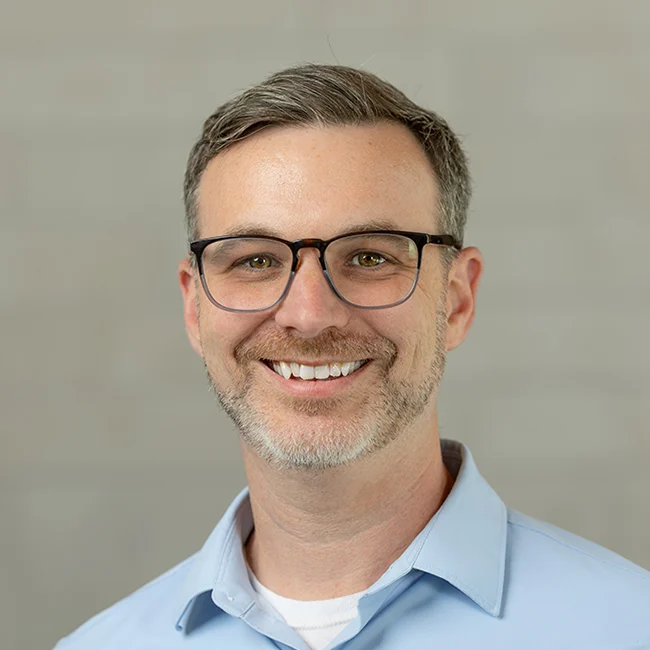
W. Michael Brode, MD
Dell Medical School at the University of Texas at Austin
Snehal Patel, MD
Central Health & Dell Medical School at the University of Texas at Austin
Published March 13, 2026
Overview
As physicians leading the Accountable Health Communities initiative in Travis County, Drs. Mike Brode and Snehal Patel bring a clinical and systems perspective on why this model works, informed by improved health outcomes and reduced costs.
Impact
The AHC initiative in Travis County is reducing preventable emergency department use, with 85% of patients seeing fewer visits after the program and $1 million in potential savings if sustained across 2,500 Medicaid patients.
During the COVID-19 pandemic, we saw that even our best medical care wasn’t enough when patients were overwhelmed by pressures outside the hospital and clinic, such as housing insecurity, missed work, and social isolation.
Knowing that we needed a solution, we started a small pilot program with Brenda Garza, one of our community health workers. She called patients staying in isolation rooms while hospitalized and asked them what they needed practically, not just medically, and helped them find it. Patients opened up about fears, goals, and barriers in ways that they didn’t with the medical team.
The pilot revealed an important blind spot: medical treatment alone falls short when patients’ real-life challenges go unaddressed. That insight shaped our work leading the Accountable Health Communities (AHC) initiative — to make this kind of whole-person care part of the system.
Why Community Health Workers are Essential
Clinic visits are short, and as physicians, we don’t always have the time or tools to understand everything patients are up against. Community health workers have a deep understanding of the communities they serve and are better positioned to meet patients where they are, talk through what’s in their way, and help navigate barriers like transportation, childcare, and food access.
We’ve had patients who didn’t know they qualified for benefits, hesitated to ask for help, or were juggling so much that they couldn’t get to a clinic, until a community health worker called and said, “let me walk you through this.”
In the AHC initiative, community health workers are an essential part of the care team. Instead of adding more pressure to our physician workloads, this gives us partners who share the load. The uncertainty of wondering what happens after a patient’s visit changes, because we have a trusted partner who follows up and navigates them through an overwhelming system.
Phone-Based Care Works
In the AHC initiative, community health workers reach patients by phone. We’ll admit that we were initially skeptical, worried that the connection that makes care work would be lost.
We quickly learned that phone-based care isn’t a compromise: for many patients, it’s what makes care possible. It enables community health workers to reach people on their terms, without the burden of traveling to meet in person.
Importantly, it scales. Each community health worker in our program reaches hundreds of patients a month — far more than would be possible in-person — without losing the personal connection that drives engagement and follow-through.
Data Keeps Care Connected
What sets the AHC initiative apart is how it uses data-sharing to keep care continuous. Powered by Connxus, Central Texas’ health information exchange, this data-sharing makes it possible for community health workers to see when patients are discharged from the ED and reach out soon after, when they’re better able to engage. With visibility into patients’ primary care connections, community health workers can support warm hand-offs and reconnect patients to ongoing care.
As a result, patients don’t fall through the cracks, clinics are better prepared to provide care, and risks are addressed earlier before they escalate.
Early Results that Matter to Patients and Providers
The AHC initiative is delivering strong early results. Among patients with prior preventable ED visits, 85% saw fewer visits in the six months after exiting the program. This translates to $1 million in potential savings if sustained across 2,500 Medicaid patients.
More importantly, these results show how this support can turn an ED visit into a turning point, not a revolving door. When patients have stronger connections to social and primary care, they gain the tools and confidence to navigate their care moving forward. As providers, we see the impact in our patients’ health, when medical care is paired with support that addresses the realities of patients’ lives.
A Better System for Everyone
Travis County’s AHC initiative is an evidence-based approach with demonstrated real improvements in access, outcomes, and cost in our own community. Building on lessons from Dallas’ implementation, we’ve strengthened the approach to make it even more effective locally. From our perspective as physicians, investing in AHC here is scaling what we know works.
By reducing preventable emergency department use, strengthening connections to primary care and social services, and improving continuity, the AHC initiative delivers the outcomes health systems and payors are actively seeking. From the clinical side, this is a model built to deliver results at scale.
About the Authors
Drs. Mike Brode and Snehal Patel are the co-principal investigators for the Accountable Health Communities initiative in Travis County, a model that connects patients to community health workers for health and social care — helping reduce preventable emergency department visits and improve health outcomes.
As physician leaders, they guide clinical strategy, support community health workers on complex cases, and champion integration of this model into everyday care, extending care beyond the clinic walls and into patients’ lives.
We use cookies to understand how you use our site and to improve your experience. By continuing to use our site, you accept our use of cookies, our Privacy Policy and Terms of Use.